understanding sin
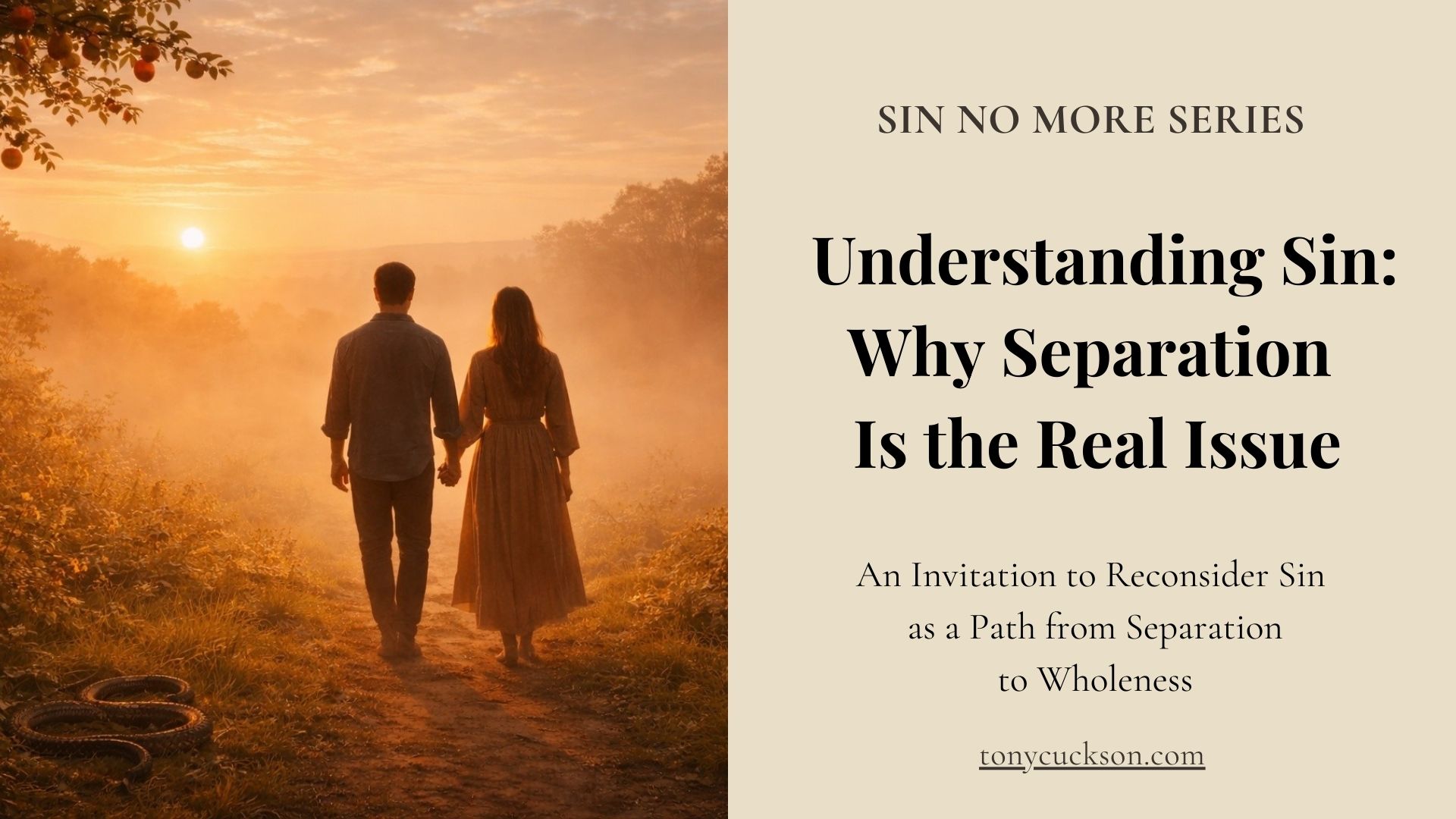
It would seem to me that one of the most important things for anyone who professes to follow Christ is to have a true understanding of sin. If we misunderstand that single word, we risk misunderstanding the entire journey, and we may believe we are walking the narrow way while unknowingly travelling what the Master described as the broad and easy road that leads to destruction. In my own upbringing within the Christian faith, I struggled deeply with the idea of sin, particularly with the doctrine of original sin. Those who held authority over the younger me were unwavering in their insistence that I was a sinner in need of redemption. In a real sense that was true, but it was not true in the way it was declared, for the declaration itself carried assumptions about the nature of sin that were never examined.
If I were to ask many Christians, especially those early in their faith, what is meant by the word “sin,” I suspect few would offer an answer that reaches the depth of what the word is pointing toward, not because they lack sincerity but because most of us have inherited definitions shaped more by religious authority than by lived spiritual understanding. We were given explanations, yet rarely invited into the experience the word was meant to illuminate. The easiest way to define sin is to say that it refers to actions that God disapproves of, and that explanation feels clear and manageable. Yet it subtly presents a God shaped in the image of human moral judgment rather than the Reality to which the word “God” points, reducing sin to rule-breaking and redemption to rule-keeping. This was the framework I inherited. Sin was going to the cinema on a Saturday morning to watch Batman and Robin, or the natural surge of desire in the body of a healthy seventeen-year-old. Sin was attached almost exclusively to moral conduct, yet this moralized definition cannot possibly exhaust what the Master meant when he said, “Go, and sin no more.”
Sin as Moral Conduct: The Inherited Definition
When religious authority declares that Jesus died for your sins and died for my sins, what are they truly saying? Are they suggesting that he died because of cinema attendance, private moral failures, or forbidden thoughts, and that the crucifixion is heaven’s response to infractions of that sort? This reduction is what I have come to call “Teacup talk of God,” because it shrinks the vast mystery of redemption into something small enough to fit within our moral anxieties and makes the cross about behavioral management rather than about the healing of the human condition itself. When sin is reduced to moral conduct, redemption becomes transactional and forgiveness resembles a kind of divine bookkeeping, yet even after forgiveness is declared the individual often still feels separate, still striving, still enclosed within a sense of isolated selfhood. The deeper condition remains untouched because the focus has remained on symptoms rather than on the source.
Sin as Separation: The Human Condition Revealed
A more mature understanding of sin requires that we look beyond the accumulated guilt and shame that have attached themselves to the word over centuries and consider whether another word might help us recover its depth without abandoning its meaning. The word I have found most faithful to the human experience is “separation.” Sin, at its root, points to the lived sense of separation, the felt experience of being cut off from God, from others, and even from our own deepest ground of Being. It is the consciousness of isolation that shapes human identity and gives rise to fear, grasping, lust, violence, pride, and every outward action we label as sin. These behaviors are not the source but the expression of a deeper fracture within perception itself.
To understand sin in this way is not to condemn yourself for feeling separate, because the experience of being enclosed within a body and navigating time and space as a solitary “I” is the ordinary condition of human consciousness. You are not wrong because you feel separate; separation is the starting point of the journey, and within it there arises a longing for unity that cannot be silenced. Beneath striving and fear there is an ache for union, and it is precisely this longing that the life and death of the Master addressed. He lived and died so that you might awaken from the sense of separation that you have mistaken for your primary identity. When he spoke of abiding, when he declared “I am in the Father and the Father is in me,” he was revealing union as the underlying truth of existence. When St. Paul wrote, “I live; yet not I, but Christ liveth in me,” he recognized that something had fallen away, not his humanity but the illusion of autonomous selfhood, the separate “I” that imagines itself cut off from the source of LIFE.
In this light, the overcoming of sin is not the management of behavior but the dissolution of the separate sense of the personal self, which is the meaning of taking up your cross and dying into LIFE. The narrow way is the surrender of the isolated “I” into conscious union, whereas the broad way is to refine moral conduct while leaving the separate self intact. A true understanding of sin reveals that what must be overcome is not merely wrongdoing but the illusion of separation itself, for it is from that illusion that all wrongdoing flows.
If this reframing of understanding sin as separation rather than moral failure stirs something within you, then you are invited to continue the journey. The Sin No More series explores this theme from multiple angles, tracing how the illusion of separation shapes human consciousness and how the invitation of the Master leads beyond it. You may also wish to begin with the foundational question, “What is sin in Christianity?”, where the core invitation of this work is set out more fully. These writings are not arguments to be won but doorways to be entered, each one pointing toward the same quiet discovery: that what we have called sin may be less about condemnation and more about awakening into the union that has always been offered.
Understanding the Nature of Sin No More Series
These writings belong to a contemplative series exploring sin not as a moral tally or an inherited stain, but as a lived condition of separation—one that obscures LIFE until it is seen clearly and released.
Together, they trace the inner movement by which guilt gives way to truth, fear yields to freedom, and the demand for moral striving is replaced by awakening to union. Sin is revealed not as identity, but as misunderstanding; not as condemnation, but as the doorway through which liberation becomes possible.
Rather than urging self-improvement, this series listens for the voice that speaks without accusation, inviting a return to wholeness where forgiveness is not earned, but recognized, and where “sin no more” arises naturally from restored Being rather than enforced restraint.
Sin No More Series
What Is a Sin in Christianity? A Deeper Understanding Beyond Guilt
The Origin of Original Sin: From Inherited Guilt to the Doorway of Freedom
Original Sin Explained — From Guilt to Repentance
The Wages of Sin Is Death Meaning — From Separation to Eternal Life
What Is the Meaning of Sin? From Guilt to Liberation
The Forgiveness of Sins Meaning: Beyond Moral Pardon