forgiveness-of-sins-meaning
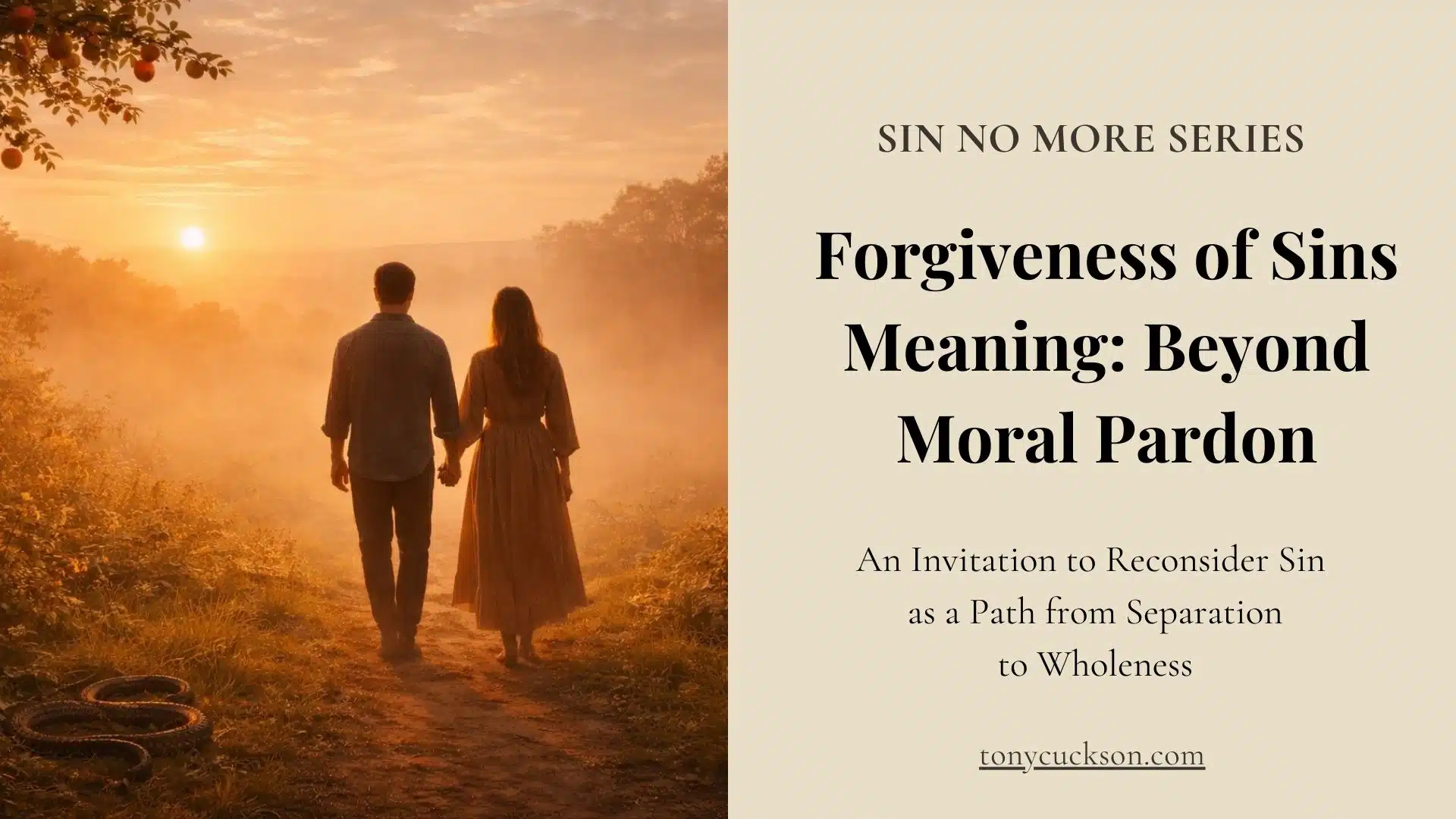
For many Christians, the phrase the forgiveness of sins is so familiar that it no longer invites reflection. It appears in creeds, prayers, and Scripture readings, often assumed to mean that God pardons moral wrongdoing when a person repents or reforms their behavior. In this common understanding, forgiveness functions as a divine response to human failure: sin is committed, remorse is expressed, and forgiveness is granted. While this explanation is widespread, it does not fully capture the deeper meaning of forgiveness as it is revealed in the Gospel. A deeper understanding of the meaning of sin is needed.
Sin as Separation, Not Behavior
Much of the confusion arises from how the word sin itself is understood. Sin is commonly reduced to wrong actions, ethical failures, or personal mistakes. Yet in its deeper biblical sense, sin is not primarily about behavior. It is a condition of awareness—a lived sense of separation from God. Sin names the experience of distance and disconnection, where life is perceived as cut off from its Source. Harmful actions flow from this condition, but they are expressions of separation, not its cause.
Seen in this light, the forgiveness of sins cannot mean that God changes His attitude toward humanity. It cannot mean that God overlooks separation or decides to be merciful after a period of displeasure. In the realm of the Divine, there is no separation to forgive, because separation has never existed there at all. God does not forgive sins in the way human beings forgive one another—by releasing resentment—because God has never been divided from humanity in the first place.
Here the deeper meaning of forgiveness begins to emerge. If sin is the experience of separation, and God never separates, then forgiveness is not the removal of something real. It is the revelation that what appeared to divide was never true. Forgiveness is not a moral transaction or legal exchange; it is an unveiling. Grace does not arrive because one has lived correctly; it dawns when the illusion of separation is seen through.
Forgiveness as Revelation, Not Transaction
This understanding does not make moral life irrelevant. Instead, it restores moral transformation to its proper ground. When forgiveness is understood as revelation rather than reward, change no longer arises from fear, guilt, or the need to earn God’s favor. Transformation flows naturally from the end of separation. Actions change not in order to receive forgiveness, but because forgiveness has already been realized as true.
To explore the forgiveness of sins meaning at this depth is to move beyond ideas of pardon and punishment and into the territory of awakening. What is forgiven is not merely an action but a misunderstanding. What is healed is not God’s relationship to humanity, but humanity’s perception of God—and of itself. Forgiveness, in this sense, is not about becoming acceptable to God. It is about discovering that separation was never the truth of our Being.
When the Church, through its many creeds, confesses the forgiveness of sins, it is not primarily making a statement about moral failure. The creeds do not catalogue transgressions or outline ethical repair. They simply acknowledge forgiveness as a reality belonging to the life of God and to the human condition as it is revealed in Christ. This suggests that forgiveness is not functioning as moral accounting, but as a disclosure of how God has always related to humanity.
If sin is understood primarily as separation, then the meaning of forgiveness shifts dramatically. Separation is not something God needs to overcome; it is something humanity experiences and believes. Sin names the lived illusion of distance—life organized around the sense of being cut off from God, from others, and from one’s own true Being. Forgiveness does not repair a rupture in God. It dissolves a rupture in perception.
From the Divine perspective, there has been no fall from unity, no withdrawal of Presence, no fracture requiring reconciliation. God does not forgive by deciding to be close again. God is always already close. As Scripture affirms, God is not far from every one of us, for in Him we live, and move, and have our being. Forgiveness is the unveiling of this reality of non-separation within human awareness. This revelation has traditionally been described as putting on the Mind of Christ—the moment when the personal story of separation loosens its grip and another way of seeing the world as a sacred unity begins to unfold.
Forgiveness cannot be earned through moral correctness. Moral effort may refine behavior, but it cannot by itself undo the belief in separation. Forgiveness arrives as grace—unbidden, unconditioned, and prior to reform. It is recognized, not achieved. And once recognized, it begins to reorder life from the inside out. Action changes not to secure forgiveness, but because the ground of fear and distance has been removed.
To understand forgiveness in this way is not to deny the reality of harm or responsibility. It is to place them in their proper context. Harm arises from separation; healing arises from the end of separation. Forgiveness addresses the root, not merely the symptoms. It does not excuse wrongdoing; it exposes the illusion that made wrongdoing seem inevitable.
In this sense, the forgiveness of sins names a movement of awakening rather than a moral transaction. What is forgiven is the belief that we were ever apart from God. What is healed is not God’s disposition toward humanity, but humanity’s misperception of God. Forgiveness reveals what has always been true: there has never been a distance to cross, only a truth to be seen.
You are invited to explore the full Sin No More Series, where these themes are taken up more fully and allowed to unfold. Each article opens another doorway beyond guilt into freedom and LIFE.
Understanding the Nature of Sin No More Series
These writings belong to a contemplative series exploring sin not as a moral tally or an inherited stain, but as a lived condition of separation—one that obscures LIFE until it is seen clearly and released.
Together, they trace the inner movement by which guilt gives way to truth, fear yields to freedom, and the demand for moral striving is replaced by awakening to union. Sin is revealed not as identity, but as misunderstanding; not as condemnation, but as the doorway through which liberation becomes possible.
Rather than urging self-improvement, this series listens for the voice that speaks without accusation, inviting a return to wholeness where forgiveness is not earned, but recognized, and where “sin no more” arises naturally from restored Being rather than enforced restraint.
Sin No More Series
What Is a Sin in Christianity? A Deeper Understanding Beyond Guilt
The Origin of Original Sin: From Inherited Guilt to the Doorway of Freedom
Original Sin Explained — From Guilt to Repentance
The Wages of Sin Is Death Meaning — From Separation to Eternal Life
What Is the Meaning of Sin? From Guilt to Liberation
The Forgiveness of Sins Meaning: Beyond Moral Pardon